



Something quietly interesting is happening with how wealth moves today. The old playbook was simple. You bought the biggest apartment in the busiest metro, watched the price tick upward, and called it a win. But spend a little time with serious investors over the last few years and you will notice the script has changed.
A new generation of buyers, especially those thinking in decades rather than quarters, are asking a different set of questions. Will this place still feel meaningful ten years from now? Can my family actually live here, not just own it on paper? Does it offer something beyond appreciation? This shift has a name, and it is showing up everywhere from Coorg to Alibaug to the foothills of the Himalayas. Welcome to the rise of the conscious capital.
What the Rise of Conscious Capital Really Means
Conscious capital is not a fancy financial term. It is just a way of describing how serious money is starting to behave. Instead of chasing pure scale, this kind of investment looks for permanence. It values emotional relevance, cultural continuity, and steady financial resilience all at once. It rewards locations that hold meaning across generations.
This is exactly the kind of place Rishikesh has quietly become. It is rooted in yoga, lifted by world-class hospitality, supported by serious public infrastructure, and held together by the constant presence of the Ganges. Few destinations layer this much value into one geography. And one project, Terra Grande by Eldeco, has been thoughtfully placed to sit right at the intersection of all these forces.
The philosophy behind conscious capital can almost be understood like the seven chakras, where each layer builds upon the next. It begins with foundational relevance, moves through infrastructure, emotional connection, validation, foresight, and finally reaches alignment. In Rishikesh, these layers come together naturally, creating a destination where lifestyle, spirituality, long-term demand, and investment potential coexist in balance.
The Timeless Relevance of Rishikesh
Rishikesh did not become globally famous overnight. Its identity has been built up layer by layer. It started as a spiritual gateway, drawing pilgrims to the banks of the Ganges. In the 1960s, when The Beatles arrived at the now-iconic Beatles Ashram, the world began paying attention in a new way. That foundation evolved into a structured wellness ecosystem with yoga schools and Ayurveda retreats, which then expanded further into adventure tourism through rafting, trekking, and bungee jumping.
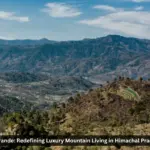
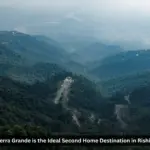
Each phase did not replace the previous one. It added to it. Today Rishikesh holds the unusual distinction of being relevant year round, across multiple kinds of travellers, for completely different reasons. The numbers back the story. The Rishikesh Tehsil population for 2026 sits at around 3,08,780, with 93 surrounding villages stitching together a living, breathing region. Rajaji National Park stretches across 2,02,731 acres of protected forest right next door. And the elevation at Narendra Nagar, where Terra Grande is located, is roughly 4,000 feet. High enough to genuinely feel like you have stepped out of the plains.
Infrastructure and the Movement of Value
For a long time, the only real friction with Rishikesh was access. That has changed dramatically. From Delhi NCR, the new Delhi-Dehradun Expressway has brought the city within roughly 3.5 hours of driving. Haridwar is just 30 minutes away. Dehradun is 28 kilometres up the road. Jolly Grant Airport, with 12 domestic flight connections linking the region to cities like Delhi, Hyderabad, and Lucknow, is a 45 minute drive.
And it is not stopping there. Two large public investments are underway that will reshape access further. The Jolly Grant Airport expansion will significantly widen the catchment of fliers. The Namo Bharat RRTS expansion will make the connection from the National Capital Region even smoother. Whenever infrastructure improves at this scale, value follows. That is one of the most consistent patterns in Indian real estate, and Rishikesh is right in the middle of it.
The Rise of Second-Home Investment in India
Second homes used to be a luxury indulgence. They are now treated as hybrid assets that combine personal use, rental income, and steady appreciation. The shift has been driven by hybrid work, rising HNI wealth, and a deep urban fatigue that built up through the pandemic years.
The Indian second-home market is now estimated at around ₹3 lakh crore, growing at a healthy 22 percent CAGR. North India alone accounts for roughly 29 percent of this share. The economics are interesting too. Luxury villas in markets like Goa and Uttarakhand are generating rental yields of about 6 to 7 percent, on top of capital appreciation of around 5 to 6 percent. That kind of dual return explains exactly why investors are looking past the metros for their next real estate move.
Three forces are pushing this trend forward. The first is urban fatigue and the shift toward nature, where scenic locations like Coorg, Alibaug, and Rishikesh are seeing rising interest driven by wellness-led living. The second is the rise of remote and hybrid working, which has stretched the weekend home into something closer to an extended-stay environment. The third is simple math. Combined yield plus appreciation in these locations is genuinely competitive with most other asset classes.
The Geography of Emotional Return
There is one more layer worth talking about, and it does not show up on a spreadsheet. Living in Rishikesh is genuinely a different experience. The air quality index here typically sits between 50 and 90, compared to Delhi’s 180 to 300 plus. Population density in Narendra Nagar is around 173 people per square kilometre, against Delhi’s 11,000 plus per square kilometre. These are not small differences. They are the difference between feeling rushed and feeling rested.
Add in the rare convergence of the Ganges, the Himalayan foothills, the Rajaji forest ecosystem, and a culture built around yoga and spirituality, and you get an environment that is almost impossible to recreate in any urban setting. People feel it. The data confirms it. Annual visitors to Rishikesh have grown from roughly 8 to 10 lakh in 2015 to between 18 and 20 lakh by 2022. Long-stay tourism alone has jumped 20 to 30 percent post 2020. People are not just dropping in. They are settling in for longer.
Hospitality as an Institutional Endorsement
When global hospitality brands plant their flags somewhere, they do not do it on a hunch. Their decisions follow years of demand analysis. Look at what is happening in and around Narendra Nagar today. The Oberoi Group has announced two new resorts in Rishikesh, with a flagship 200 key property in the pipeline. Accor is bringing Sofitel to the region, with around 160 keys planned. Chalet Hotels acquired the Westin Resort and Spa Rishikesh for ₹530 crore, a 146 key property with 141 keys under their portfolio. ITC Hotels is set to open a 55 key property by 2026.
Put together, that is more than 700 luxury hospitality keys in the immediate corridor. This is the making of a serious luxury hospitality corridor, and it tells you everything you need to know about where institutional confidence currently sits.
The Advantage of Entering Ahead of the Curve
Markets like this work in stages. Early-stage value creation happens when demand starts rising while supply is still catching up. That is exactly the window Rishikesh is in right now. Demand has grown by approximately 30 percent year on year through FY25. Supply, on the other hand, has actually contracted by 13.8 percent. Less supply, more demand. The result is the kind of pricing momentum that creates real wealth for the people who buy in early. Recent benchmarks like Aloha Apartment and Homage Villa Township have already touched appreciation potential in the range of ₹40,000 per square foot.
The phrase often used is buying ahead of the curve. In Rishikesh, that curve is still rising.
What is also changing is how buyers now perceive these properties. Rishikesh is increasingly being positioned not just as a traditional second-home destination, but as a modern weekend-home market. Improved connectivity from Delhi NCR, hybrid working culture, and wellness-led living have made shorter but more frequent stays far more practical. For many investors, this shift increases both lifestyle utility and long-term demand potential.
Engineering Certainty on Complex Terrain
Building on a hillside is not the same as building on flat urban land. It requires precision, planning, and engineering depth that very few developers actually possess. This is where Terra Grande makes a quiet but important choice. The project has partnered with GeoQuest, formerly known as Terre Armee, a global leader in geotechnical engineering with experience executing some of the world’s tallest reinforced earth structures.
For an investor, this matters more than it might first appear. Terrain is one of the biggest reasons hillside investments fail. A development that solves for slope stability, terrain reinforcement, and long-term structural integrity offers something more valuable than just beautiful views. It offers confidence.
Terra Grande, Where the Conscious Capital Finds Alignment
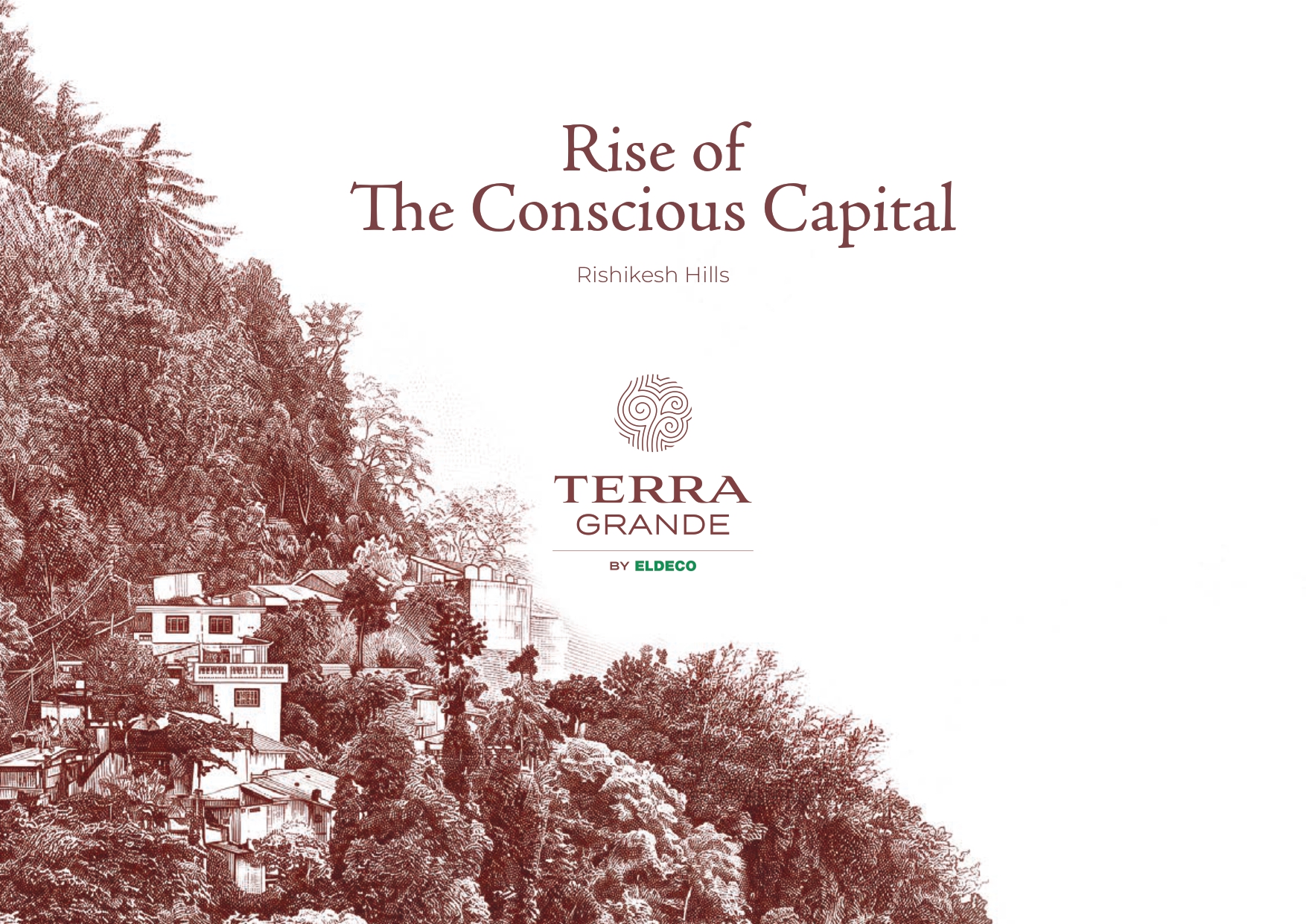
Bring all of these layers together and you arrive at Terra Grande in Rishikesh Hills. It is the kind of project that does not just check boxes. It expresses an entire philosophy of investing.
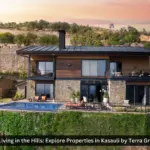
Every villa is designed for uninterrupted Ganges-facing views. The development is intentionally low-density, protecting privacy and exclusivity. The villas come fully managed, so owners do not have to worry about upkeep or rental operations. The land is municipality-approved with clear regulatory backing. There is no Uttarakhand domicile requirement, which means ownership is open to anyone in India. The location sits inside the emerging luxury hospitality corridor of Narendra Nagar, with improving connectivity to both Dehradun and Delhi. And the engineering, as mentioned, is built for the long haul.
This is what alignment looks like. Timeless relevance, infrastructure-led growth, rising second-home demand, lifestyle quality, hospitality validation, market foresight, and engineering certainty all meeting in one address.
The rise of the conscious capital is not a marketing slogan. It is a genuine shift in how serious investors are thinking about the next ten years of their wealth. And in that shift, Rishikesh holds a place very few destinations can claim. Terra Grande simply brings all of it into one home.
Building on a hillside is not the same as building on flat urban land. It requires precision, planning, and engineering depth that very few developers actually possess. This is where Terra Grande makes a quiet but important choice. The project has partnered with GeoQuest, formerly known as Terre Armee, a global leader in geotechnical engineering with experience executing some of the world’s tallest reinforced earth structures.
For an investor, this matters more than it might first appear. Terrain is one of the biggest reasons hillside investments fail. A development that solves for slope stability, terrain reinforcement, and long-term structural integrity offers something more valuable than just beautiful views. It offers confidence.